7.8 Mechanical Processes | Laser Cutting
Laser cutting is used for the final contour processing of flexible and thin rigid areas on rigid-flex printed circuit boards.
In this contactless process, the material is vaporized by the precise energy input of special laser sources – a process known as laser ablation. The exact alignment of the laser beam is ensured by registration marks in the production panel.
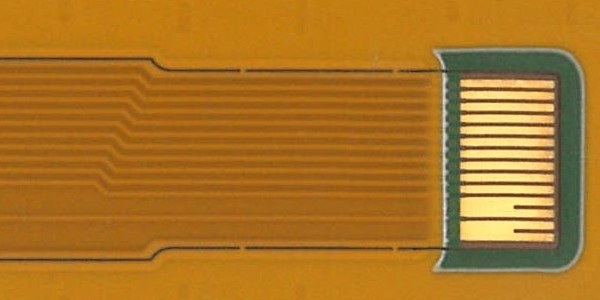
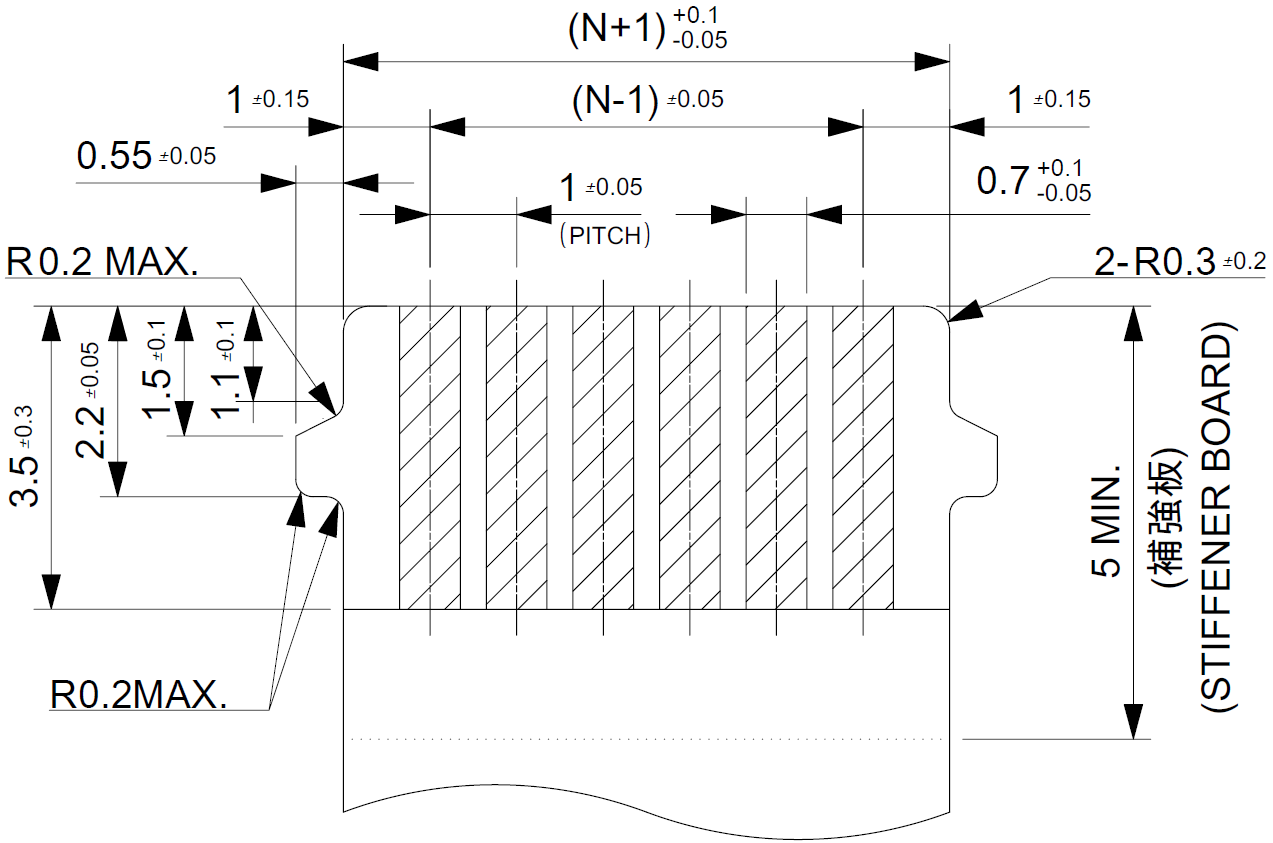
A major advantage of this process is the clean cut edges, as no mechanical forces are applied to the sensitive material. In addition, the laser enables the realization of very tight radii, which are particularly necessary for the precise contours of zero-insertion force (ZIF) connectors.
To hold the flexible parts securely in position during the subsequent assembly process, they are fixed in the panel by retaining bars. These can be removed easily and cleanly after assembly.
Features & Advantages
- Contour accuracy
- Quality of contour
- Short retaining bars can be removed by simply pulling them off
- Low space requirement compared to significantly wider milling channels
- Small gap between copper and contour
- Tight radii
Keywords
- Laser cutting
- Depaneling
- Laser processing