3.6.1 HSMtec® PCB

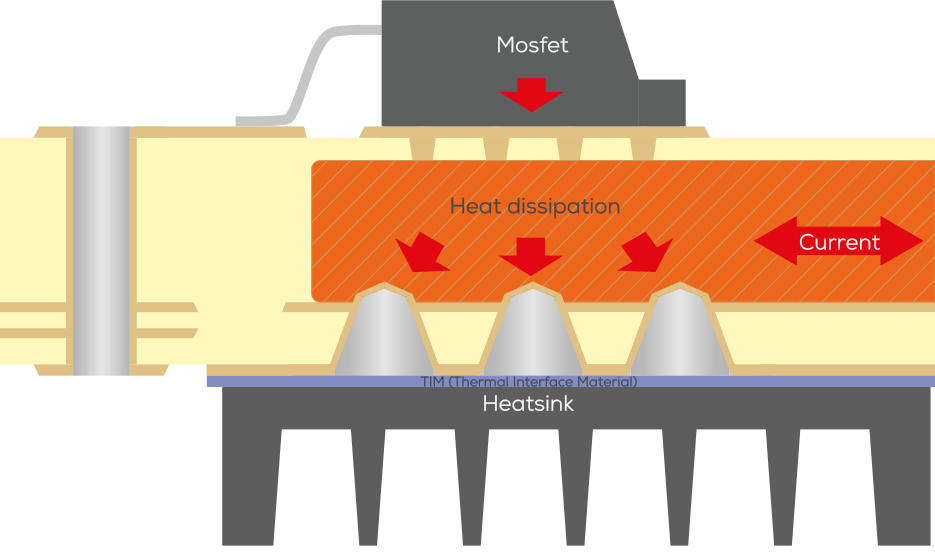
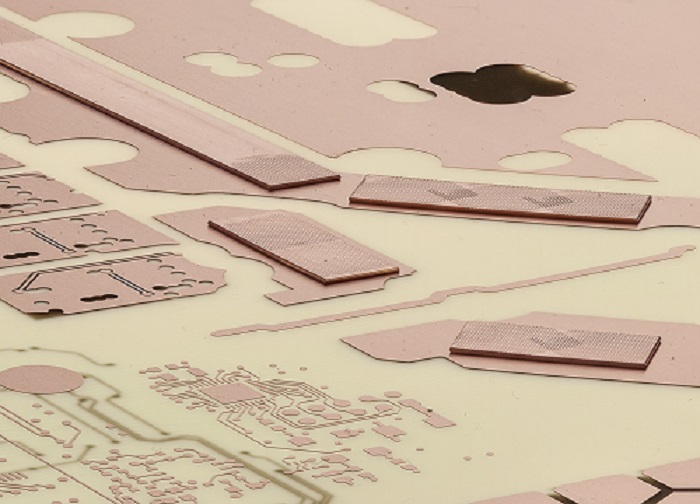
By partially integrating copper profiles, copper inlays, busbars into the PCB, high-current paths and a fine conductor layout can be combined in one board. The vast array of design options means that high currents and heat losses can be carefully channeled through PCBs.

Features & Advantages

  • High-current paths of several hundred amps
  • Thermal management for power components (MOSFETs, IGBTs, and more)
  • Standard processes used during production and further processing
  • Increased efficiency and service life of components
  • Increased reliability through the elimination of plug and cable connections, busbars, etc.
  • Reduced space requirements, lower component weight and volume
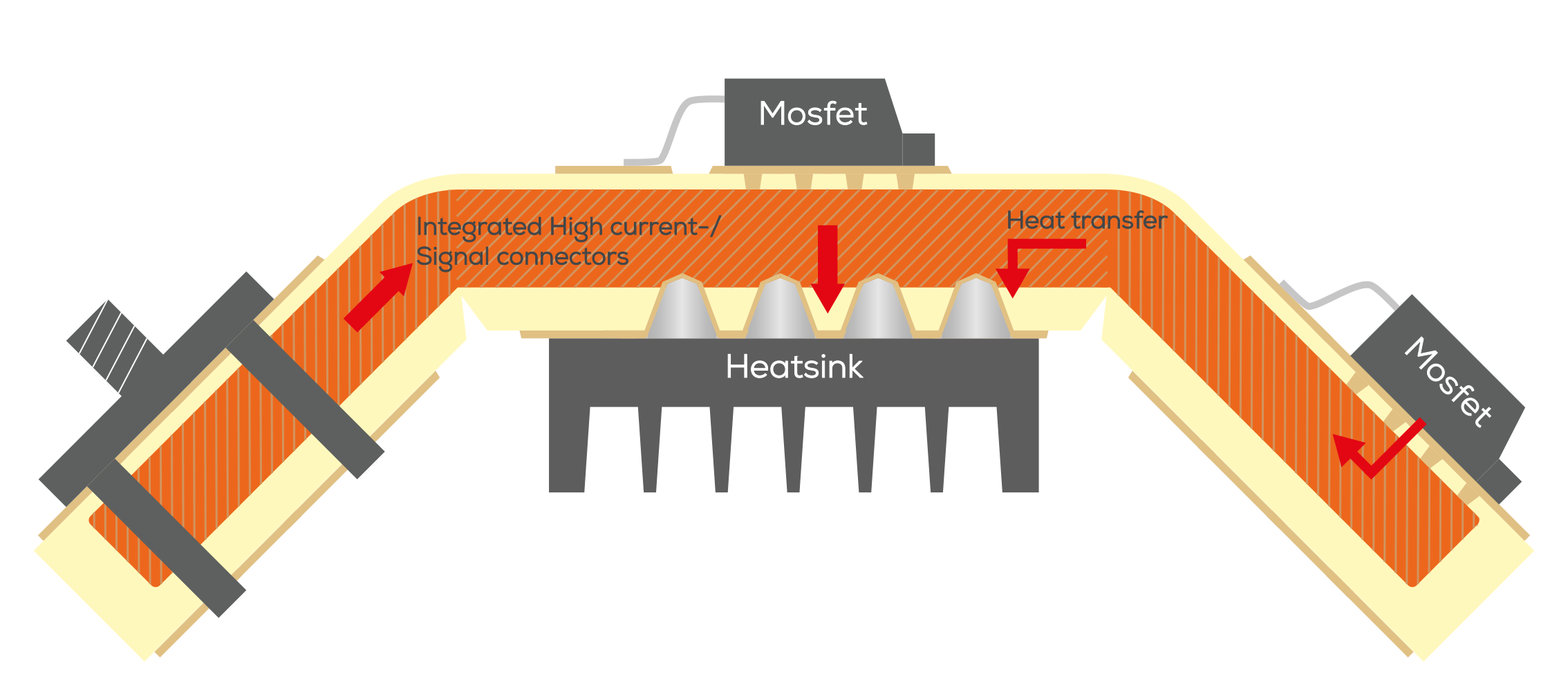
  • Slot scoring enables the creation of three-dimensional self-supporting PCB elements

Principle and Production Process

With the HSMtec® circuit board technology, heat development in electronic assemblies can be quickly reduced to permissible partial and system temperatures. FR4 and copper-based PCBs consist of several layers. Copper profiles are additively applied to these layers to reinforce conductors. This is done selectively and only at those points where high currents are to be transported or heat is to be dissipated.

After pressing, these copper cross-sectional areas are located inside the PCB, creating valuable free space on the surface of the board. In addition, HSMtec® makes it possible to bend PCBs, thereby allowing 3D geometries of any complexity.
PCB Types Back to top

High-Current PCB

Thermal Management PCB

3D PCB

The HSMtec® PCB technology enables the partial insertion of large copper cross-sectional areas in any position and layer of a standard FR4 multilayer. Thanks to the vast array of design types, high currents or heat losses from components can be carefully channeled into PCBs – without the need for any further external work steps.
Learn more
Modern power components dissipate the heat losses rapidly to ensure that the assembly enjoys a long service life while also optimizing its efficiency. By partially integrating solid copper elements into FR4 PCBs, extremely low thermal resistance values can be achieved for any shape and size of component. In turn, this enables hot spots to be strategically avoided.
Learn more
The HSMtec® technology also allows self-supporting 3D PCB structures to be created, which is the key to realizing efficient and visually appealing designs and creative products. As part of this process, electrical and thermal connections can be fully integrated into the PCB. This offers a high level of flexibility for all kinds of multidimensional applications.
Learn more
Design examples and Design solutions can be found under 16.3 Design Solutions | HSMtec®.
Processing Recommendations Back to top
An HSMtec® PCB is similar to a heavy copper PCB in that the increased copper content results in a higher thermal mass. This must be taken into account during further processing. For this reason, we strongly recommend drying in accordance with the ZVEI drying recommendation before soldering. Furthermore, a slower, gentler (flatter heating ramp) solder profile is recommended. The peak temperature should be as low as possible but as high as necessary.

Keywords

  • HSMtec
  • Copper profiles
  • Copper inlays
  • Busbars
  • Thermal management
  • High current
Next entry:
3.6.2 HSMtec® | High-Current
Go to the next entry