
2.5 LED Applications
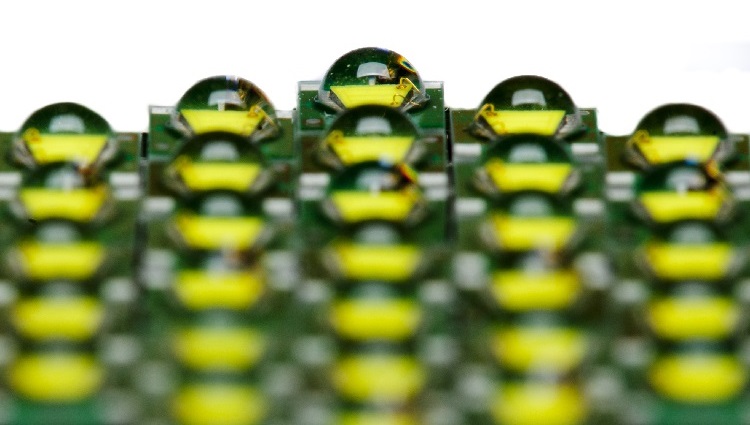
Features & Advantages
- More than 3 times the thermal conductivity of aluminum IMS PCBs
- Service life is 3.5 times longer than for aluminum IMS
- Optional insulation strength > 4 kV
- LEDs and control electronics on one board
- Creative lighting and product design
- No need for cables and connectors
- Lower system costs
HSMtec® LED PCB
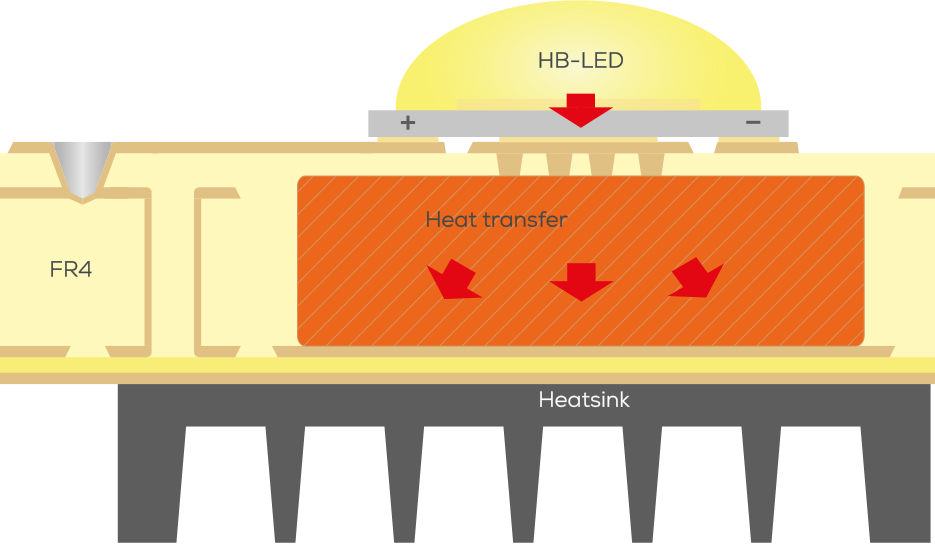
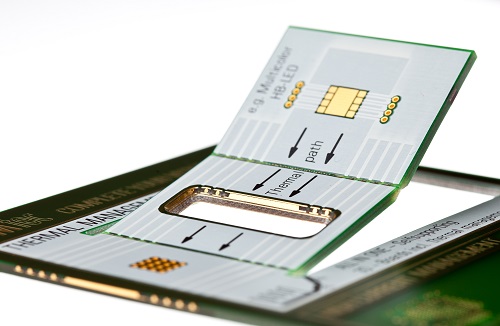
HSMtec® 3D PCB
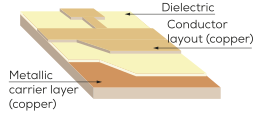
Copper IMS PCB
Starting with your initial product idea, our Technical Support Team will be happy to advise you every step of the way as they work with you to find the most suitable PCB solution.
By opting for an HSMtec® LED PCB, you can overcome the limits of conventional PCB technologies for LED applications. The partial integration of solid copper parts into conventional FR4 PCBs makes it possible to achieve ultimate performance and reliability – compared to PCB technologies such as metal core PCBs. Not only that, but there is also maximum flexibility from an electrical and visual perspective at the same time.
Learn more
Learn more
The HSMtec® technology also allows self-supporting 3D PCB structures to be created, which is the key to realizing efficient and visually appealing designs and creative products. If simple single-layer layout structures are sufficient but there is also a need for very high thermal performance, the copper IMS PCB is the ideal technical solution.
Learn more
Learn more
Insulated metal substrate PCBs/metal core PCBs with a copper base offer maximum thermal performance for simple electrical circuits in conjunction with optimum reliability/cycle stability.
Learn more
Learn more
Frequently asked questions
How do copper PCBs and aluminum core PCBs compare in terms of cost, heat dissipation, etc.?
Aluminum core PCBs are less expensive but the downside is that they are only available as a single-layer version within the low-cost segment. In the case of LED applications, the service life and reliability are heavily restricted compared to copper PCBs (depending on the LED type); for more information, see “Reliability of the soldered connection” in Section 3.6.3 HSMtec® PCB | Thermal Management. By comparison, copper PCBs are appreciably more expensive, but the upside is that they allow you to have more layout layers (control electronics on board). Not only that, but they are also more reliable when the requirements are high.
Keywords
- LED PCBs
- Aluminum-core PCBs
- Thermal conductivity
- Thermal management
- Reliability
- LED lighting