
2.2 High-Frequency and Radar Applications
Features & Advantages
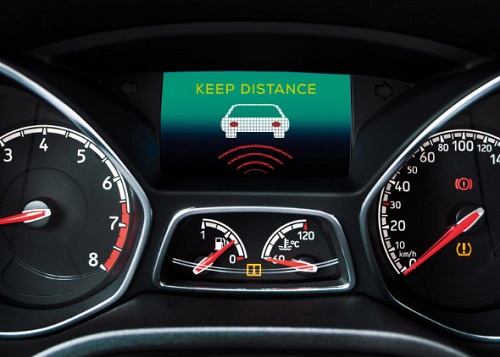
- Radar technology need not be confined to the automotive industry
- High-frequency hybrid stackups in a large number of different versions
- Wide range of special high-frequency base materials High-frequency base materials
- Do you require narrow etching tolerances or high geometric accuracy? With KSG, you get them as standard!
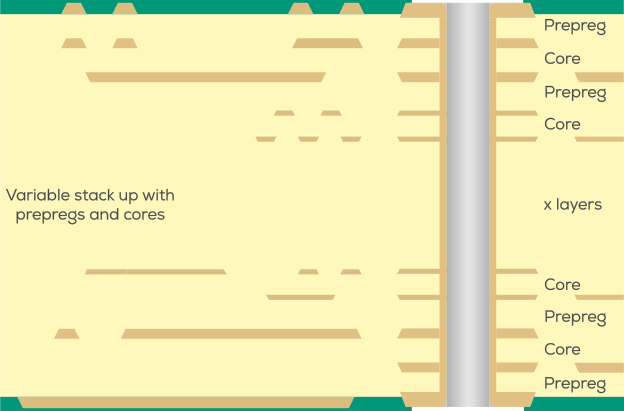
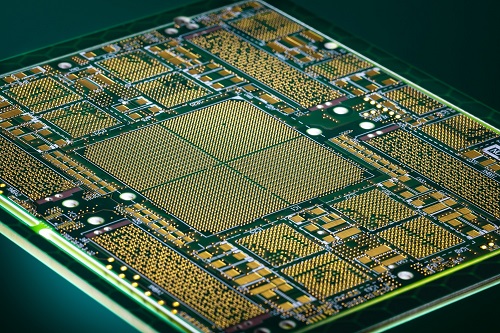
- High-layer, high-speed full stackups
- Additional performance boosting technologies, such as Backdrilling
High-layer, High-speed full Stackups
For high-speed applications involving higher frequencies and higher clock rates, single-material full stackups are usually used. These are constructed by using the same material throughout, e.g., Megtron 6 High-frequency base materials. Highly integrated high-speed circuits of this kind typically require a large number layers to enable fanout routing for complex components. All these layers generally have to possess the same material properties within their environment, which is why such scenarios call for full stackups that consistently use the same material with good high-speed properties.
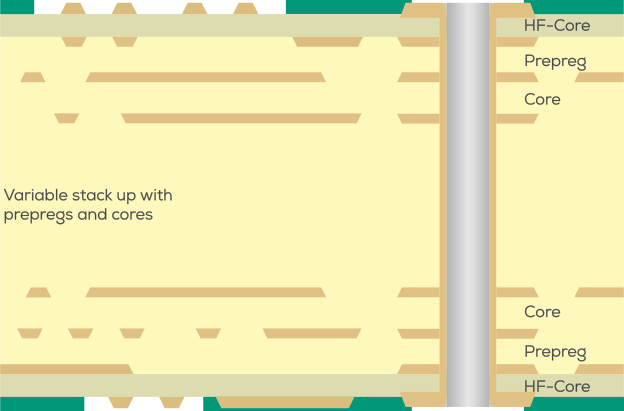
High-Frequency Hybrid Stackups
For high-frequency applications in the radar range, e.g., 77 GHz radar technology, very specific high-quality materials are required. These are often based on polytetrafluoroethylene (PTFE) High-frequency base materials.
With these kinds of high-frequency circuits, only the outer layers are typically needed for the high-frequency layout and so a hybrid stackup is used. The outermost laminates (which may be present on one side or both sides) are made from a high-quality high-frequency material, with the remaining layers being built up using FR4 material.
With these kinds of high-frequency circuits, only the outer layers are typically needed for the high-frequency layout and so a hybrid stackup is used. The outermost laminates (which may be present on one side or both sides) are made from a high-quality high-frequency material, with the remaining layers being built up using FR4 material.

Example Applications
InnoSenT GmbH traffic monitoring system
(24 GHz)
(24 GHz)
- Measurement of speeds and distances
- Operation regardless of critical weather influences
- Detection of moving objects by alarm systems, access control systems, combinations of video and radar technology
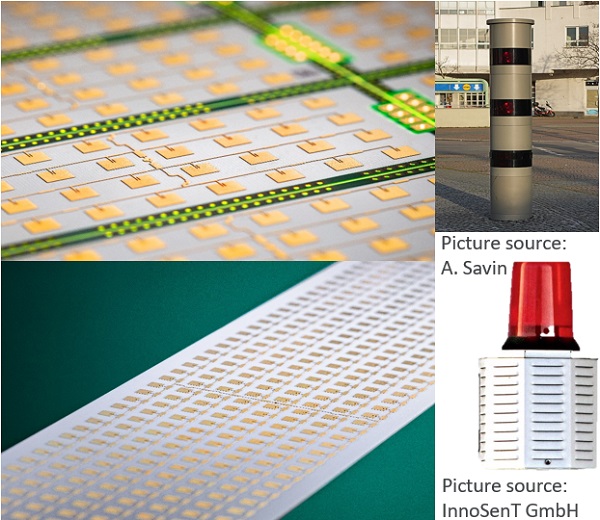
InnoSenT GmbH level sensor
(24 GHz)
(24 GHz)
- Contactless (advantageous from a hygiene perspective)
- Penetration of different materials (advantageous from a positioning perspective)
- Resistant to soiling (advantageous from a maintenance perspective)
- Tolerance range of 1 mm to a few cm
- Example: Recording of river levels
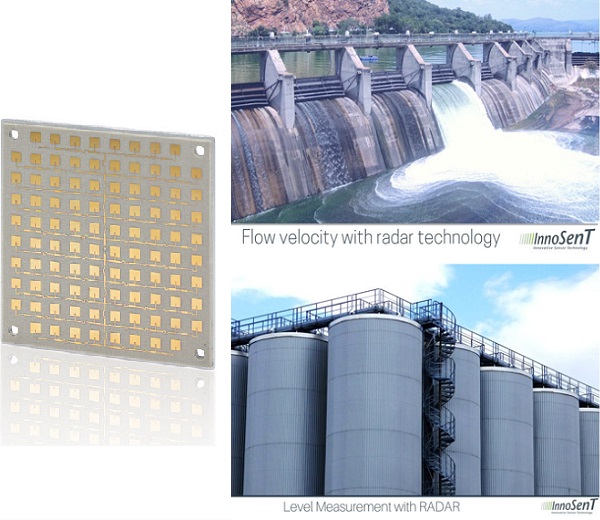
Keywords
- Radar
- High-speed
- Hybrid stackups
- Polytetrafluoroethylene (PTFE)
- Etching tolerances
- High frequency